Kitchen & Dining
The 3 Best Chef's Knives of 2026
A single good chef's knife outperforms a drawer full of dull ones. We tested the leading 8-inch knives on steel, balance, handle comfort, and edge retention, and these three are the ones worth your money in 2026.
An 8-inch chef's knife is the tool most cooks reach for every day, so the differences that matter are in the hand: how the handle sits in your grip through a long prep session, how the blade moves through an onion without wedging, and how many weeks the edge stays keen between sharpenings. Our three picks cover the classic European style, a true budget standout, and a Japanese blade for cooks who prize finesse.
Our Top Picks
- Wüsthof Classic 8-Inch Chef's Knife — Best Overall
- Victorinox Fibrox Pro 8-Inch — Best Budget
- Shun Classic 8-Inch Chef's Knife — Best Japanese
At a Glance
| # | Product | Score | Price | Best for |
|---|---|---|---|---|
| 1 | Wüsthof Classic 8-Inch Chef's Knife | 4.8 / 5 | $170 | — |
| 2 | Victorinox Fibrox Pro 8-Inch | 4.6 / 5 | $40 | — |
| 3 | Shun Classic 8-Inch Chef's Knife | 4.7 / 5 | $180 | — |
1. Wüsthof Classic 8-Inch Chef's Knife
Best Overall
WHBUYS Score: 4.8 / 5
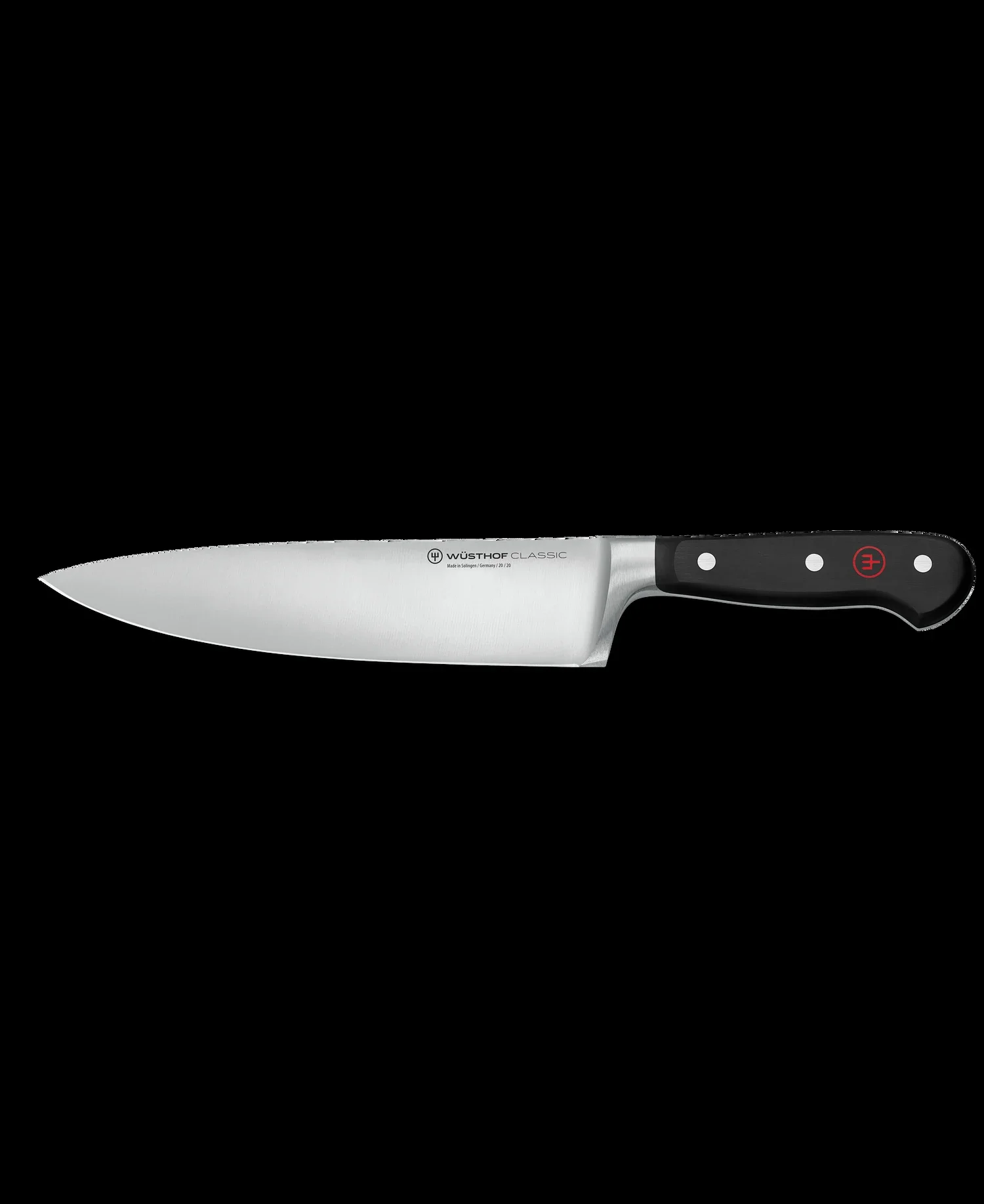
This is the knife culinary schools hand to students, and the one we would hand to almost anyone. Forged from a single piece of high-carbon stainless steel in Solingen, Germany, it has the heft and balance that make long prep sessions feel controlled rather than tiring — the weight sits forward enough to do the work, without dragging your wrist. The full bolster protects your fingers and adds to the planted feel, while the curved belly rocks smoothly through herbs and garlic. The edge, sharpened to about 14 degrees per side, takes a keen bite and holds up well between honings. The triple-riveted handle is contoured, durable, and comfortable for hours. At around $170, it is a genuine buy-it-for-life tool.
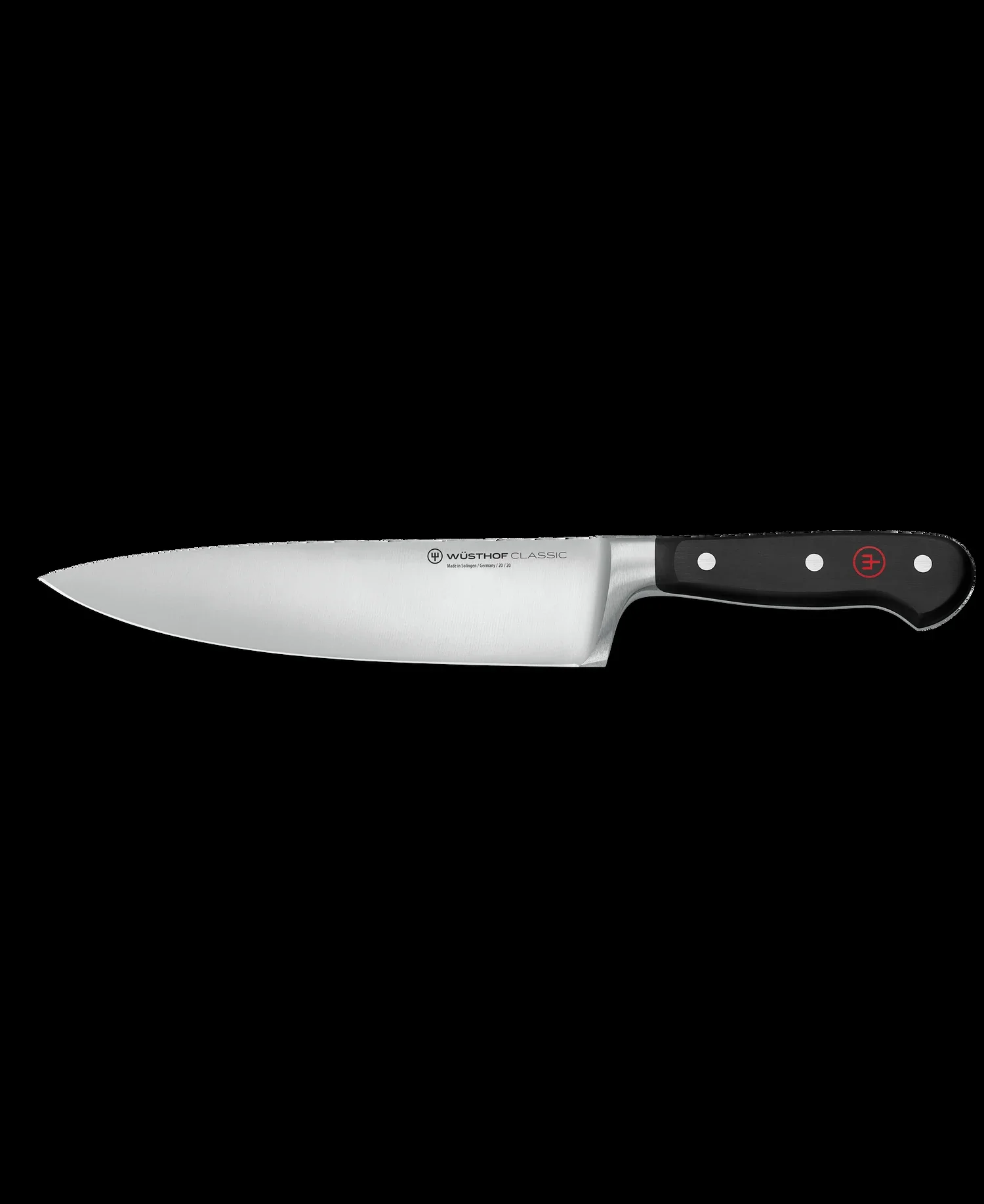
- Forged high-carbon stainless steel, full tang
- Edge angle about 14° per side
- Made in Solingen, Germany
What we like
- Superb balance and a confident, planted feel
- Durable edge that hones back easily
What to consider
- Heavier than Japanese-style knives
- Full bolster complicates sharpening over time
2. Victorinox Fibrox Pro 8-Inch
Best Budget
WHBUYS Score: 4.6 / 5
Professional cooks have quietly relied on this knife for decades, and the reason is simple: it cuts far above its price. The stamped high-carbon stainless blade is thin and light, so it glides through onions and proteins with little wedging, and it arrives genuinely sharp out of the box. The textured Fibrox handle is the real star — grippy even with wet hands, comfortable in any hold, and shaped to keep your knuckles clear of the board. Edge retention is modest, so plan on honing often and sharpening regularly, but the steel responds quickly to a rod or stone. For around $40, nothing else comes close, and it makes an ideal first knife or hard-working backup.
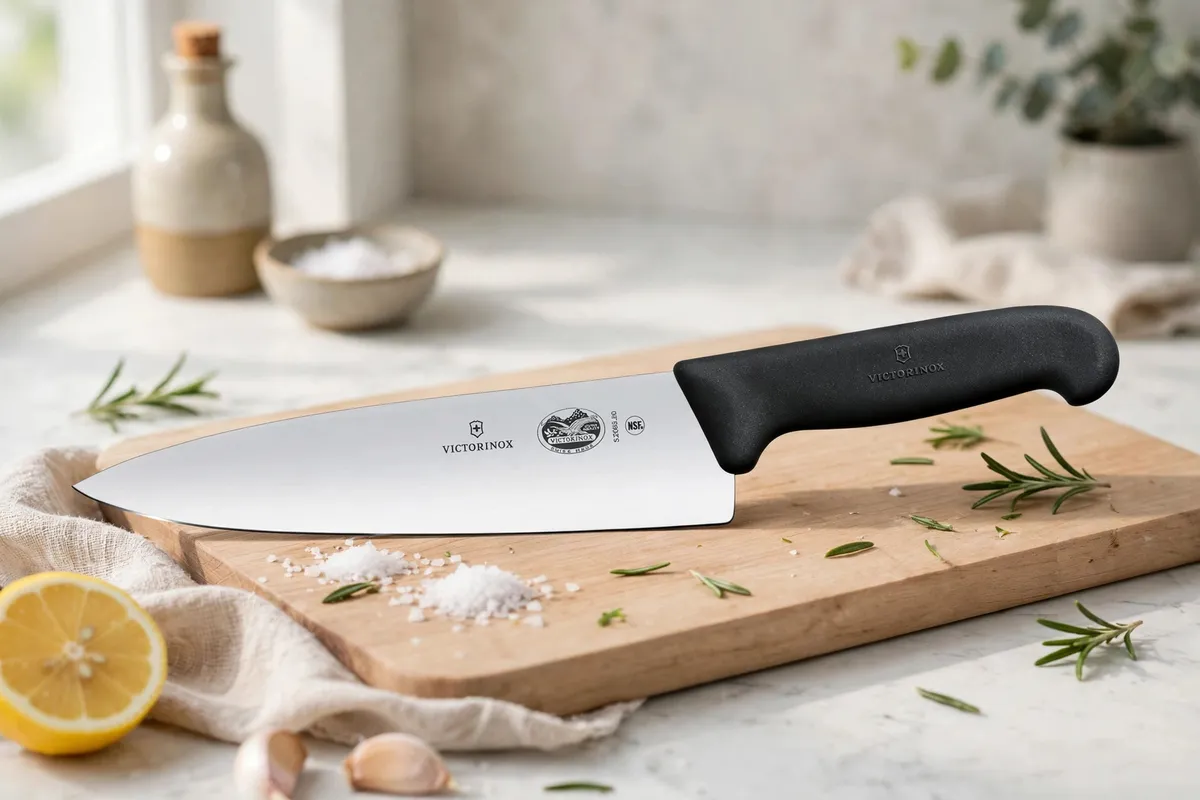
- Stamped high-carbon stainless steel blade
- Textured non-slip Fibrox handle
- Lightweight at about 6.5 oz
What we like
- Unbeatable performance for the price
- Grippy, comfortable handle with wet hands
What to consider
- Edge needs frequent honing
- Light weight feels less premium
3. Shun Classic 8-Inch Chef's Knife
Best Japanese
WHBUYS Score: 4.7 / 5
If you want precision over heft, this is your knife. The blade pairs a hard VG-MAX steel core with 34 layers of stainless Damascus cladding per side, producing a rippled finish that is as functional as it is beautiful — the layers help food release and resist staining. Sharpened to about 16 degrees per side, it takes a finer edge than European knives and slices paper-thin garlic and ripe tomatoes with almost no pressure. The D-shaped PakkaWood handle suits right-handed users especially well, and the whole knife feels nimble and exact in the hand. The trade-off is care: the harder, thinner edge can chip on bones or frozen food. Around $180 buys genuine Japanese craftsmanship.
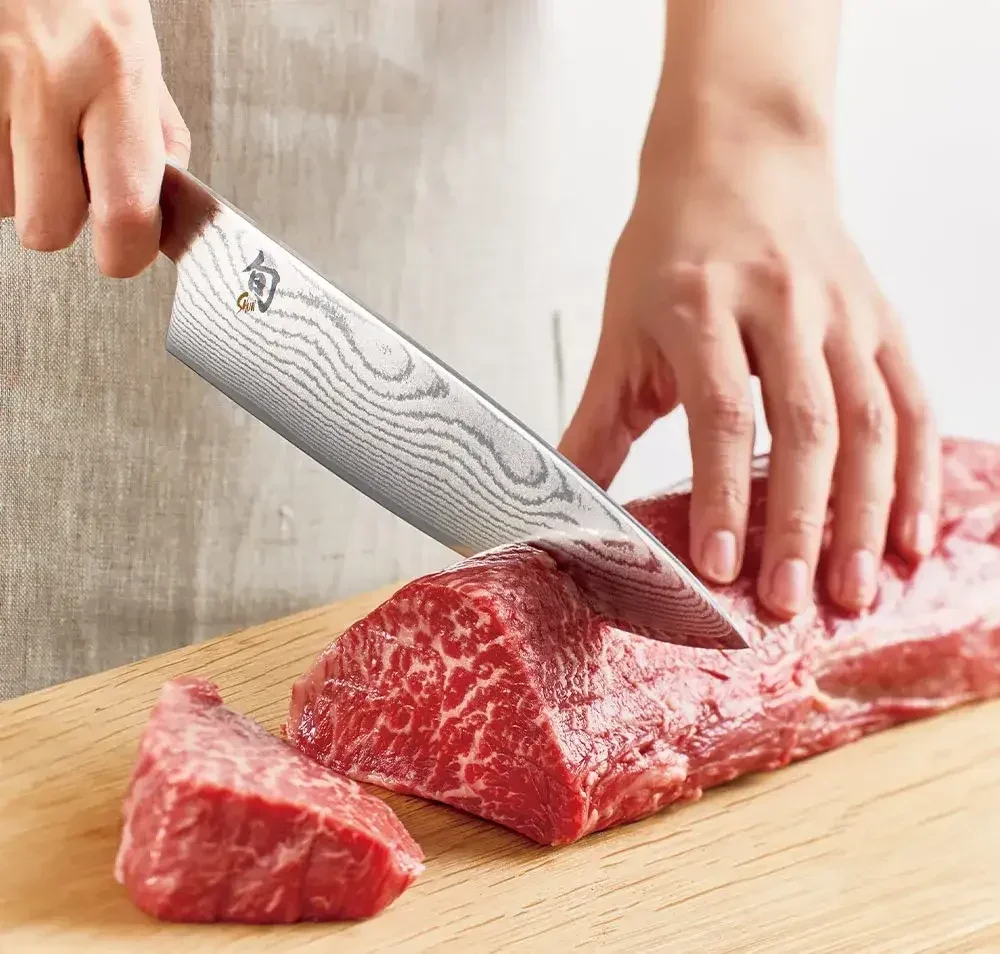
- VG-MAX core with 68-layer Damascus cladding
- Edge angle about 16° per side
- D-shaped PakkaWood handle; handcrafted in Japan
What we like
- Razor-fine edge for precise slicing
- Beautiful Damascus finish aids food release
What to consider
- Harder edge can chip on bones
- D-shaped handle favors right-handed users
How to Choose a Chef's Knife
Start with feel, because this is a tool you will hold every day. European knives are heavier, with a curved belly built for rocking through herbs and a thicker edge that shrugs off hard use. Japanese knives are lighter and thinner, with harder steel that takes a keener edge but needs more care around bones, squash rinds, and frozen food. Neither style is better — the right one follows your grip, your cutting motion, and what you cook most.
Then think about maintenance. Softer steels dull faster but come back quickly on a honing rod or stone; harder steels hold an edge longer yet need gentler handling and slower, more careful sharpening. Whatever you buy, store it on a magnetic strip or in a block rather than loose in a drawer, hand-wash and dry it, and hone regularly. A well-kept mid-priced knife will out-cut a neglected expensive one every time.
Frequently Asked Questions
What size chef's knife should I buy?
Eight inches is the standard for a reason — long enough to break down a melon or a chicken and to work through a pile of onions, yet short enough to control precisely. Cooks with smaller hands sometimes prefer a 6-inch blade, while very tall cooks may like a 10-inch knife for large tasks.
How often should I sharpen my knife?
Hone briefly before or after each use to realign the edge, and sharpen on a stone or with a quality sharpener once honing stops restoring the bite — for most home cooks, that is every few months. A dull knife is both frustrating and unsafe, because it slips instead of cutting.
Can I put a good chef's knife in the dishwasher?
No. Dishwasher heat, harsh detergent, and rattling against other items dull the edge and can crack or warp the handle. Wash the knife by hand with warm soapy water, dry it immediately, and store it on a strip or in a block.